December 25, 2025
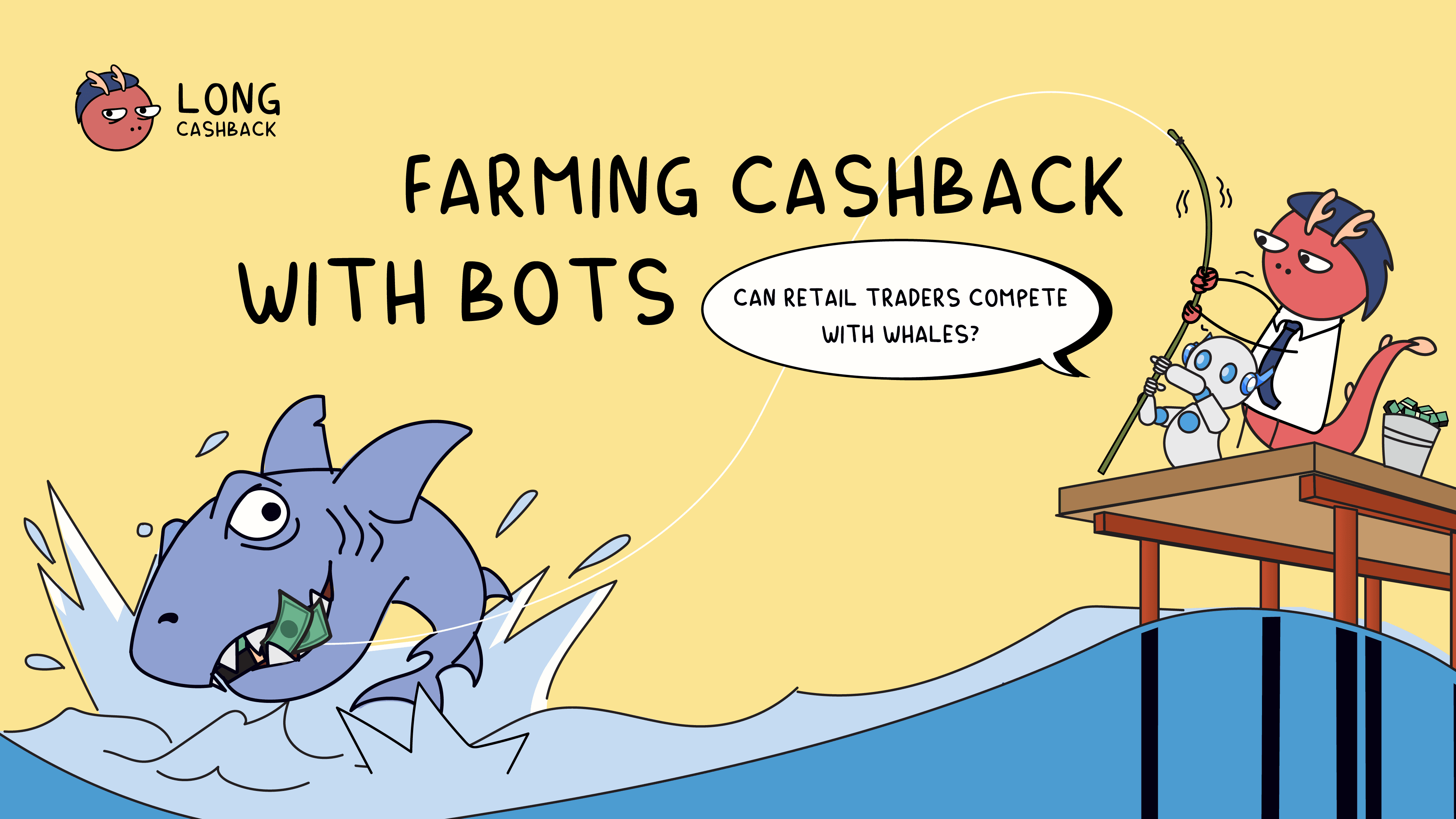
In the crypto market, every trading cycle creates new narratives. One of the most discussed topics recently is “farming cashback with bots.” Many traders wonder whether this approach is only viable for large players with massive capital, or if individual retail traders can realistically compete and benefit from it. This article takes a practical, data-driven look at cashback farming using bots, explains how it works, analyzes the advantages and limits for retail traders, and clarifies where the real edge lies.
Cashback farming is not about extracting profit directly from price movements. Instead, it focuses on reclaiming part of the trading fees you already pay. When combined with automated trading bots that generate consistent trading volume, cashback becomes a measurable and predictable component of net returns.
At its core, the formula is simple: net profit equals gross trading profit minus fees plus cashback. For strategies with thin margins or high trading frequency, fees often represent a large portion of costs. Cashback directly reduces those costs, effectively improving net ROI without increasing market risk.
Trading bots are designed to execute strategies continuously and systematically. Grid bots, market-making bots, and arbitrage bots are especially relevant in cashback farming because they generate frequent trades, even in sideways or low-volatility markets.
For individual traders, bots solve two problems at once. First, they automate execution, removing the need to monitor charts constantly. Second, they create steady trading volume, which is the key input for cashback programs. More volume means more fees paid, and with cashback enabled, more fees returned.
Large traders and institutions clearly have structural advantages. With higher capital, they can deploy more aggressive market-making strategies, negotiate lower base fees, and operate on tighter spreads. Their scale allows them to generate enormous volume, which translates into substantial cashback amounts.
Additionally, whales often have access to advanced infrastructure, custom bots, and direct exchange relationships. This enables them to optimize latency, reduce slippage, and maximize maker fee benefits. From a purely absolute profit perspective, retail traders cannot compete with whales in terms of size.
However, cashback farming is not purely a scale game. Retail traders do not need to outperform whales in absolute numbers; they only need to optimize their own net returns. This is where cashback becomes especially powerful.
Retail traders often operate strategies with modest gross returns. In such cases, fees can easily consume a large share of profits. By reclaiming 30–50% of fees through cashback, a strategy that barely breaks even can turn consistently profitable. This relative improvement in ROI is often more impactful for small accounts than for large ones.
Bots also level the playing field to some extent. Many exchanges now offer built-in grid bots or allow third-party bot integration, giving retail traders access to tools that were once exclusive to professionals. While execution quality may differ, the underlying mechanics remain similar.
Cashback farming is not risk-free. High-frequency strategies amplify exposure to market structure risks such as sudden breakouts, liquidity gaps, and exchange outages. Bots can accumulate unfavorable positions if markets trend strongly beyond predefined ranges.
There is also the risk of misunderstanding cashback terms. Not all programs are transparent. Some pay rewards in volatile exchange tokens, impose lock-up periods, or apply conditions that reduce the effective payout. Retail traders must carefully evaluate cashback providers and ensure payouts are clear, consistent, and verifiable.
Successful cashback farming depends on aligning strategy design with cost optimization. Grid bots should be configured within realistic price ranges and adjusted as market conditions change. Maker orders should be prioritized where possible, as they typically incur lower fees and qualify for higher cashback rates.
Copy trading and signal-based bots can also contribute to volume, but they require careful selection of strategy providers. Poorly chosen strategies can increase drawdowns, negating the benefits of cashback.
The key insight is that cashback acts as a competitive equalizer. It does not give retail traders the same absolute power as whales, but it significantly narrows the efficiency gap. By reducing costs, cashback improves the sustainability of trading strategies over time.
For many retail traders, the difference between long-term survival and gradual account erosion lies not in finding a perfect strategy, but in minimizing friction. Fees are one of the most consistent forms of friction in trading, and cashback directly addresses this issue.
Lóng Cashback is an example of a transparent cashback solution designed for active traders. It supports multiple top-tier centralized exchanges and offers cashback rates of up to 50%, paid automatically on a regular schedule. For traders running bots or high-frequency strategies, this structure simplifies cost management.
With clear dashboards and stablecoin payouts, traders can easily track returned fees and incorporate them into performance analysis. This transparency is crucial when evaluating the true net ROI of any strategy.
Retail traders should approach cashback farming with realistic expectations. Competing with whales on volume is unrealistic, but optimizing personal efficiency is achievable. By combining moderate bot-driven volume with reliable cashback, traders can stabilize returns and reduce the emotional pressure of relying solely on market direction.
The goal is not to extract extraordinary profits from cashback alone, but to use it as a structural advantage that supports consistent performance.
Farming cashback with bots is not an exclusive game reserved for whales. While large players benefit from scale, retail traders can still compete on efficiency. By leveraging automated bots, focusing on fee optimization, and choosing transparent cashback programs, individual traders can significantly improve their net results.
In an environment where market conditions are often unpredictable, reducing costs is one of the few variables traders can truly control. Cashback, when integrated thoughtfully into a bot-based strategy, becomes a practical and sustainable tool for long-term trading performance.
Can retail traders compete with whales by farming cashback using bots? This article breaks down how cashback works, the role of bots, and whether optimizing fees can meaningfully improve net ROI.
tradingfutures cashbackcrypto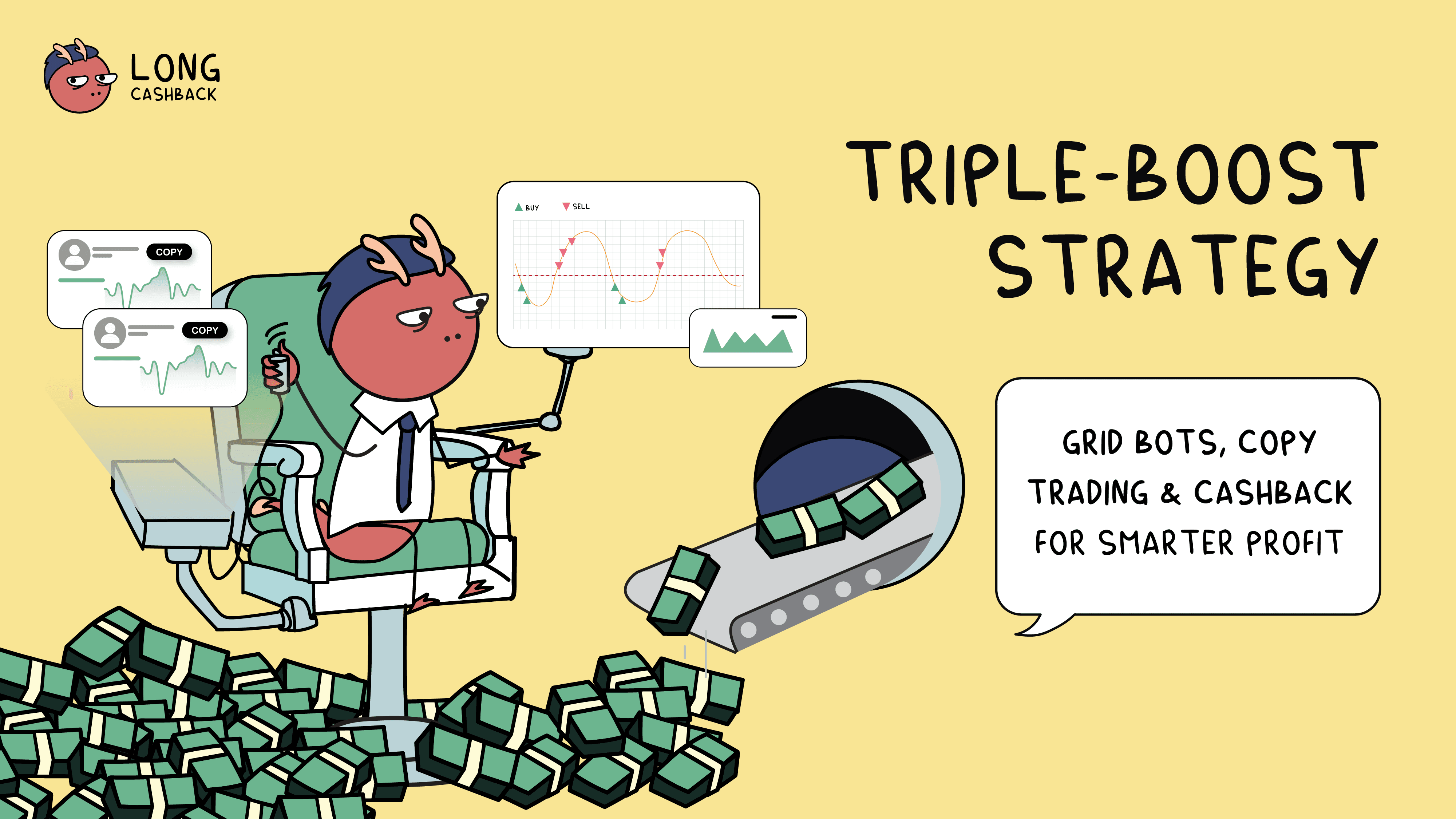
A practical approach to crypto trading that combines Grid Bots, Copy Trading, and Cashback to improve net ROI, reduce fees, and build a more resilient trading system.
grid bot gridtrading cashbackcrypto copy trade futurestrading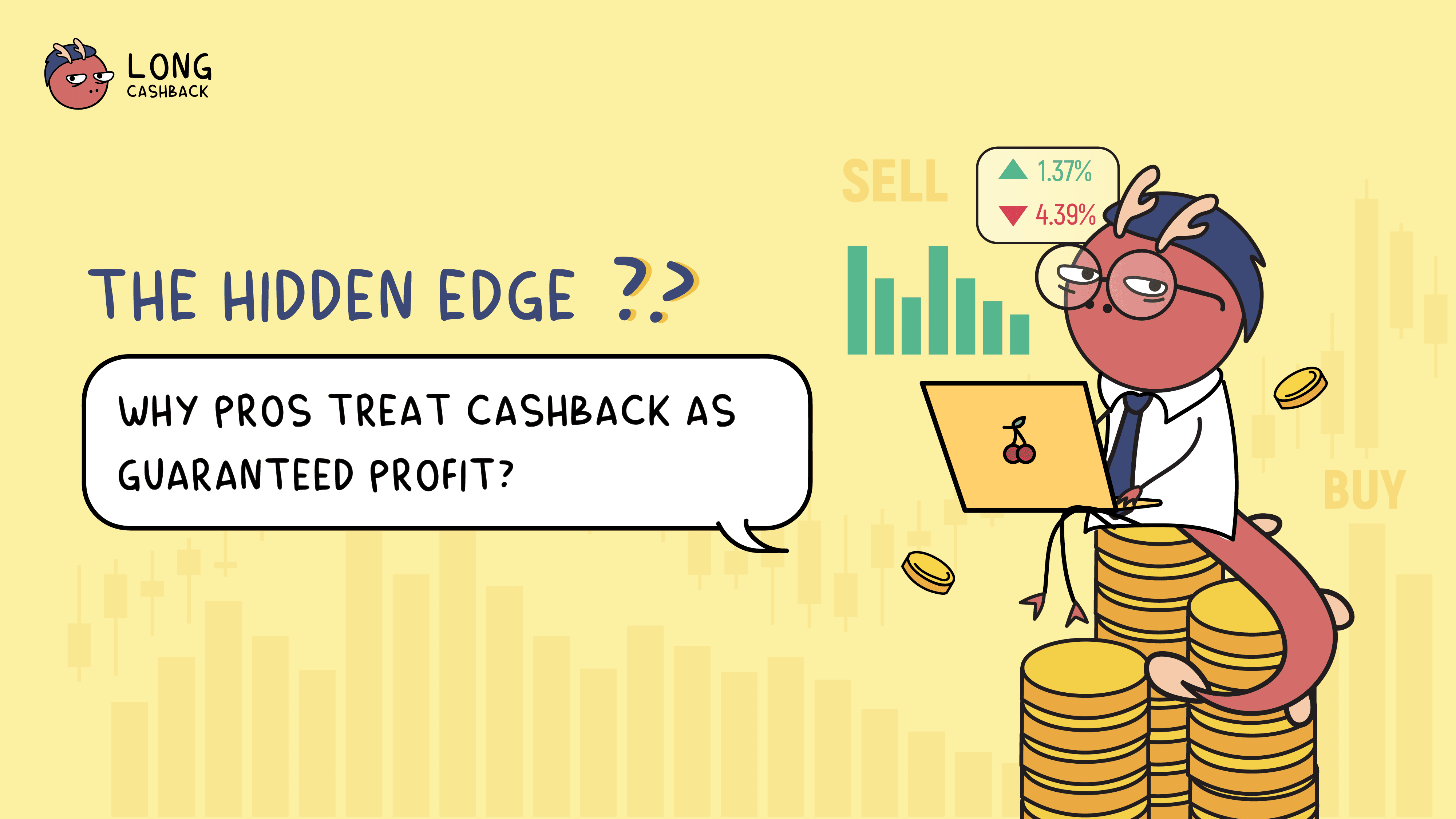
Cashback has become the “safest form of profit” that many pro traders optimize before even thinking about trade-based gains. Market-independent, stable, and risk-free, cashback reduces costs, boosts real PnL, and provides a long-term competitive edge for anyone trading consistently.
longcashback cryptocashback futurestrading tradingstrategy cryptotradingfee
 Long cashback